
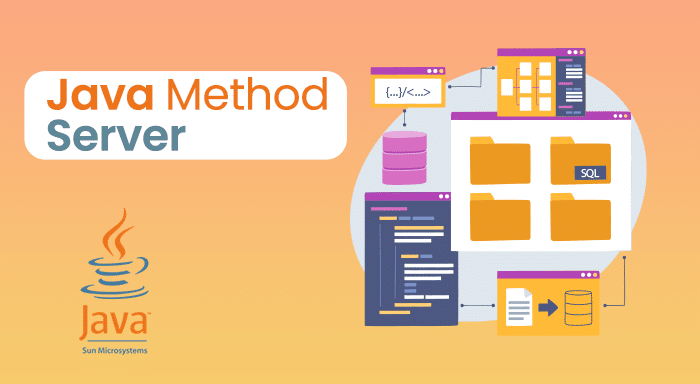

Java Method Server (JMS) is a detailed mechanism to works for the automatic execution or control of the Java methods on the server side. This technology helps developers in Java development to easily deploy applications with manageable features.
This blog will explain to you what a Java Method Server is, why it is beneficial, how it operates, and how it can be optimized.
What is a Java Method Server?
Java Method Server is a part of Java EE architecture that lets execute Java methods on the server. It allows developers to operate back-end applications without a hitch, particularly since Java is particularly portable and performs very well.
The idea is thus to have a central hub where Java methods can be triggered in response to a request for services by clients such as web and mobile-based applications.
Benefits of Implementing Java Method Server
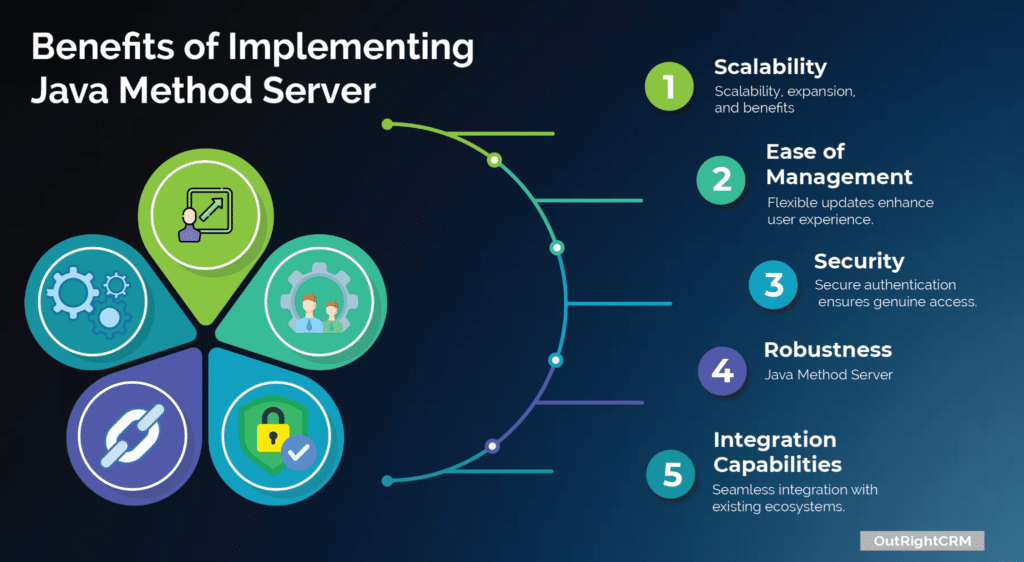
1. Scalability:
The two primary benefits of a Java Method Server are its scalability and the growth of the amount of service consumption. It is possible to expand the server horizontally by adding more instances of the Java Method Server.
This coding technology makes it possible for applications to be easily responsive for usage despite the intensity of the users.
2. Ease of Management:
With JMS, the control of Java methods is made easier in the sense that, changes and modifications can be made without necessarily affecting already running services.
This means that developers can bring in new features or release patches and fix bugs without having to take considerable time from users hence improving the overall user experience.
3. Security:
Security is always an important issue in any application and Java Method Servers are developed to include mechanisms for safe sharing of critical information.
They use an authentication and authorization mechanism, and this means that only genuine users can perform given methods.
4. Robustness:
Java Method Servers are constructed on the Java platform, thus the Java Method Server has the same reliance as other Java mechanisms. This is very important, especially for those applications that fall under the enterprise level which requires high stability.
5. Integration Capabilities:
Integration of JMS with different databases as well as other third-party services is not a complex matter. This is done via Java Database Connectivity (JDBC ) or RESTful APIs thus the ability to reuse existing ecosystems with minimal integration hassles.
How Does a Java Method Server Work?
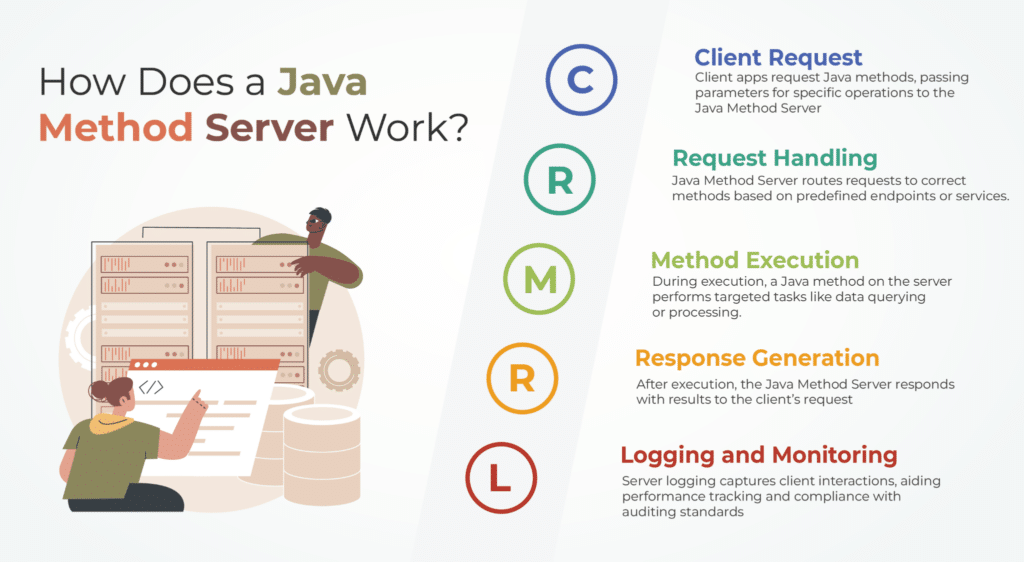
The operation of a Java Method Server can be explained in several steps:
- Client Request: A client application simply sends a request to the Java Method Server. This request often involves parameters required when calling particular Java methods into operation.
- Request Handling: The Java Method Server gets the request and forwards it to the correct Java method. He stated that this routing is mostly expressed on the pre-defined endpoints or described services.
- Method Execution: The specified Java method is performed on the server to accomplish the goal that has been targeted. While it is at this execution phase, the server could be involved in actions such as Data Querying, Data Processing, or invoking other services.
- Response Generation: After the execution of the method is finished, the Java Method Server has to provide the response which generally contains the results of the method execution. It is then returned to the client as a response to the request that was made.
- Logging and Monitoring: The interaction with the client then gets recorded in the server response after which the server records the interaction. Such logging is useful in tracking how the application performs, especially when experiencing errors, and in ensuring compliance with auditing standards.
Role of Java Method Servers in Enterprise Applications
Java Method Servers can play an important role in enterprise applications where multiple users, services, and business processes need to communicate with a centralized backend. Businesses often rely on server-side applications to process customer information, manage transactions, connect databases, and support different software modules.
For example, a CRM application may use server-side Java methods to process customer requests, retrieve account information, update records, or communicate with external services. Keeping these operations on the server helps maintain centralized business logic while allowing different applications and interfaces to access the same functionality.
Java development can also support integrations between CRM platforms, databases, APIs, and other business applications. This makes a Java-based server architecture useful for organizations that need scalable and reliable software solutions as their operations grow.
For businesses developing or customizing enterprise applications, the server layer should be designed with scalability, security, database connectivity, and integration requirements in mind. A well-structured Java Method Server can therefore contribute to more maintainable and efficient business applications.
Developers who are building their programming foundation can also explore resources to Learn JavaScript, especially when working with web-based interfaces that communicate with server-side applications.
Guide to the Effective Java Method Servers
To ensure that your Java Method Server performs at its best, consider the following best practices:
1. Use Connection Pooling:
One can enhance application performance by using connection pooling in managing the connections to the database. This minimizes on overhead of establishing and terminating connections which is a great improvement.
2. Implement Caching:
Exploit caching techniques to improve data storage mechanisms. It can cut the number of times, which one has to access the database and is therefore faster and more efficient.
3. Monitor Performance:
One should use tools for analyzing Java Method Server output and discover the potential slowing factors. The practice of daily monitoring prevents the escalation of bigger issues that may prove difficult to solve.
4. Optimize Code:
Make sure the methods written in Java are fine-tuned. This involves not performing complex calculations, minimizing the call of other libraries where they are not required, and coding neatly.
5. Scale Appropriately:
Control the amount of load your app is receiving and add or remove Java Method Server instances to meet that load. Employ load balancers which will ensure that the request is equally divided among different server instances.
Java Method Server for CRM and Business Software
Java Method Servers can be particularly useful when developing business software that needs to handle frequent database requests, customer transactions, and communication between multiple application components. CRM systems, for example, may need to process large volumes of customer data while maintaining consistent performance for sales, support, and management teams.
A server-side Java architecture can centralize important business logic and allow different parts of a CRM application to communicate with databases and external services. This can make it easier to maintain application functionality while providing a foundation for future integrations and custom development.
Performance is another important consideration for business applications. Frequently requested information can be served more efficiently when appropriate caching techniques are used. A Java Caching System can help reduce repeated database operations and improve response times when properly implemented.
When developing CRM or other enterprise applications, businesses should also consider security, scalability, API integration, database performance, and monitoring. These factors help ensure that the application remains reliable as the number of users, customers, and business processes increases.
For companies looking to build or customize CRM solutions, combining robust server-side development with an appropriate application architecture can provide a strong foundation for scalable business software.
Conclusion
Java Method Server provides a reliable and efficient framework for executing Java methods in response to client requests. The benefits of using a JMS, such as scalability, ease of management, and security, make it an attractive choice for enterprise-level applications.
By following best practices for optimization, developers can ensure that their Java Method Servers operate efficiently, providing a stellar experience for end-users.
Frequently Asked Questions (FAQs)
What is a Java Method Server?
A Java Method Server is a framework that allows Java methods to be executed on a server, providing centralized management and execution of backend code for applications.
How does a Java Method Server improve scalability?
It can scale horizontally by adding more server instances to handle increased loads, ensuring that applications remain responsive.
What security features does a Java Method Server provide?
It offers authentication and authorization mechanisms to ensure that only valid users can execute specific methods, protecting sensitive data.
Can I integrate a Java Method Server with other applications?
Yes, JMS supports integration with various databases and third-party services through JDBC or RESTful APIs.
What are some best practices for optimizing a Java Method Server?
Best practices include using connection pooling, implementing caching, monitoring performance, optimizing code, and appropriate scaling.
%201.png)

%201.png)

%201.png)